Raffle Drawing Rules and Compliance: How to Run a Legal and Transparent Online Raffle
Planning an online giveaway or drawing? Learn the legal differences between lotteries, raffles, and sweepstakes. Discover regulations in the US, UK, and EU, and how to run transparent random draws.
Introduction
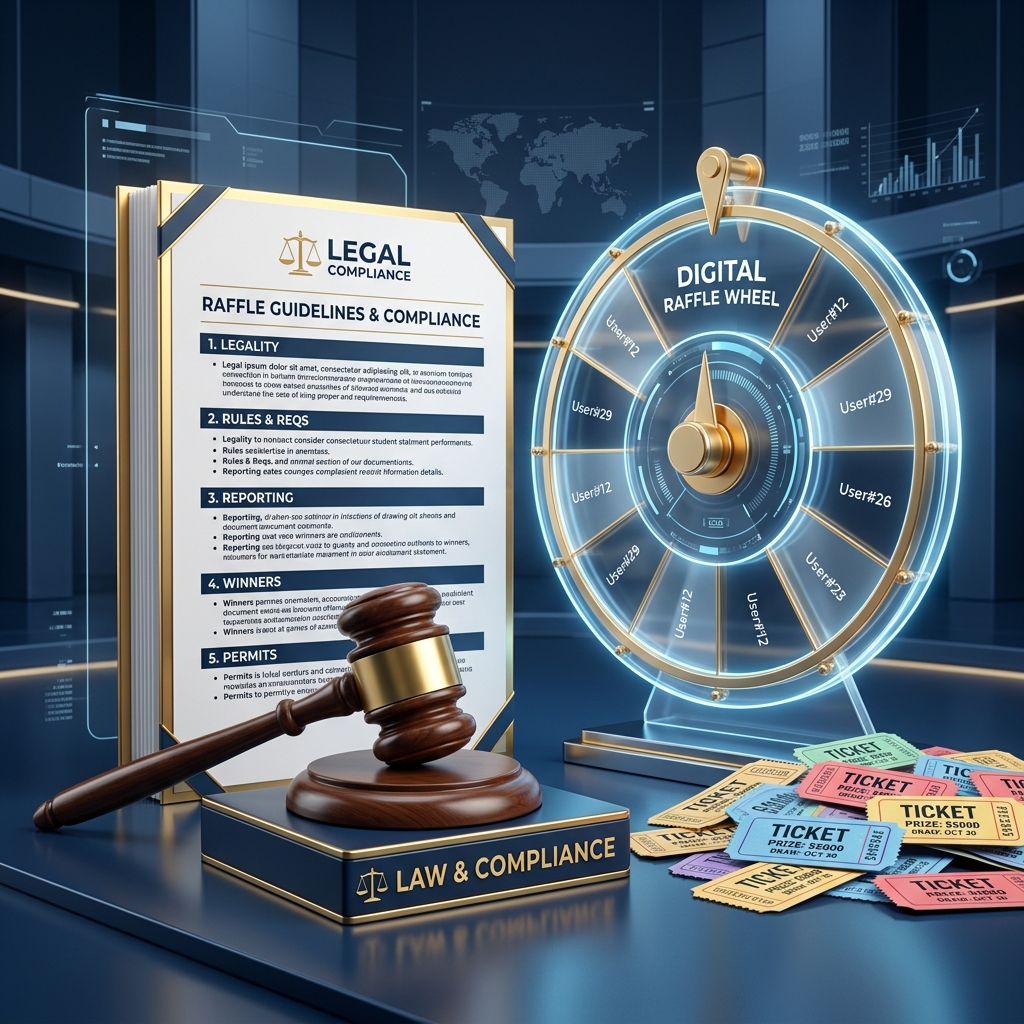
Hosting online draws and giveaways is one of the most powerful strategies for businesses, content creators, and charitable organizations to boost engagement. Whether it is an e-commerce brand looking to grow its mailing list, an Instagram influencer celebrating a milestone, or a school raising funds for new equipment, the promise of winning a prize naturally draws a crowd.
However, behind the excitement of the drawing lies a complex web of legal regulations.
In many jurisdictions, running an unregulated online drawing can accidentally cross the line into hosting an illegal lottery. This can result in severe legal penalties, platform bans on social media, and a loss of trust from your community.
Understanding the legal landscape of drawings, raffles, and sweepstakes is critical.
In this comprehensive guide, we analyze the legal distinctions between different types of drawings, examine online raffle regulations in the US, UK, and EU, and detail how to use a transparent random draw mechanism to keep your giveaways fun, fair, and legally compliant.
The Legal Triad: Lotteries vs. Sweepstakes vs. Raffles
To run a compliant online event, you must understand the legal definitions of the three primary types of prize giveaways. In the eyes of the law, a promotion is defined by three main elements: a prize (something of value), chance (the winner is chosen at random), and consideration (entering requires payment, purchase, or significant effort).
1. Lotteries: The Restricted Territory
A lottery consists of all three elements:
`text
Lottery = Prize + Chance + Consideration (Payment/Purchase)
`
If participants must buy a ticket or purchase a product to enter a drawing where the winner is chosen by chance, it is legally classified as a lottery.
Crucial Compliance Rule: In almost every country, private businesses, individuals, and influencers are strictly prohibited from running lotteries. Only state-run entities (like the National Lottery) or highly licensed commercial operators are legally allowed to host them.
2. Sweepstakes: The Commercial Safe Haven
A sweepstakes (often called a "giveaway" or "promotion") consists of a prize and chance, but excludes consideration:
`text
Sweepstakes = Prize + Chance + NO Consideration (Free to Enter)
`
Because there is no requirement to pay or make a purchase to enter, sweepstakes are legal in most jurisdictions and are widely used by brands for marketing.
Crucial Compliance Rule: To keep your promotion classified as a sweepstakes, you must offer a free method of entry (often referred to as the "No Purchase Necessary" rule). If customers can buy products for entries, you must provide an alternative, free method of entry (like writing a letter or filling out a free online form) that offers the exact same odds of winning.
3. Raffles: The Charitable Exception
A raffle is a specific type of lottery where tickets are purchased, and the winner is drawn at random.
`text
Raffle = Prize + Chance + Purchased Ticket (Reserved for Nonprofits)
`
Because consideration (purchasing a ticket) is required, raffles are technically lotteries. However, most governments grant special exemptions to registered charities and nonprofit organizations to host raffles for fundraising purposes.
Online Raffle & Giveaway Laws by Region
United States Regulations
In the US, giveaways are governed by a combination of federal agencies (including the FTC, FCC, and USPS) and individual state laws.
- Charitable Raffle Laws: In the US, for-profit businesses cannot run raffles. Only registered 501(c)(3) nonprofits are eligible, and they must comply with specific state regulations. Some states (like California) require nonprofits to register and report raffle earnings, while others (like Hawaii and Utah) ban raffles entirely.
- The "Alternative Method of Entry" (AMOE): For commercial sweepstakes, if a purchase provides entries, state laws mandate that the AMOE (free entry option) must be prominently displayed. You cannot hide the free entry option in tiny font or make the entry process unreasonably difficult.
- Tax Reporting (1099-MISC): If the value of the prize exceeds $600, US tax law requires the host to issue a Form 1099-MISC to the winner, and the winner must report the prize as taxable income.
United Kingdom Regulations
The UK has strict regulations managed by the Gambling Commission under the Gambling Act 2005.
- Lotteries vs. Free Draws: Similar to the US, commercial companies in the UK cannot run paid-entry lotteries. They must host "Free Draws" where entry is free.
- Prize Competitions: In the UK, you can run a paid-entry "Prize Competition" if the entry requires a significant element of skill, knowledge, or judgment that would prevent a large percentage of people from entering or getting the correct answer. Standard random drawing wheels do not qualify as skill tests and must remain free-to-enter.
European Union Regulations
In the EU, consumer protection laws and data privacy regulations are the primary considerations.
- GDPR Compliance: You cannot force participants to opt-in to marketing emails as a mandatory condition for entering a free drawing. Under the General Data Protection Regulation (GDPR), consent to marketing must be given freely and separately from the drawing entry.
- National Restrictions: Individual EU countries have their own rules. For example, in Italy, giveaways must be registered with the Ministry of Economic Development and require a local legal representative.
5 Pillars of a Compliant and Transparent Online Drawing
To ensure your next giveaway is legal and builds trust with your community, implement these five compliance pillars:
1. Draft Clear "Official Rules"
Every drawing must have a dedicated "Official Rules" document accessible to all participants before they enter. This document should state: * Who is eligible to enter (age, geographic restrictions). * The entry period (exact start and end dates with time zones). * How to enter (including the free alternative method of entry). * A clear description of the prize and its retail value. * How the winner will be selected and notified. * A liability release, including any platform-specific disclaimers (e.g., stating the giveaway is not sponsored by Instagram).
2. Provide a Genuine "No Purchase Necessary" Option
If you run an e-commerce giveaway, ensure your free alternative method of entry (AMOE) is easy to find. The free entries must have the exact same chance of winning as the entries generated through purchases.
3. Ensure Strict Data Protection
If you collect emails, names, or addresses for the drawing, you must protect this data. * Display a link to your Privacy Policy on the entry page. * Do not pre-check the "Opt-in to newsletter" checkbox (consent must be active). * Safely delete participant data after the draw if they did not opt-in to marketing.
4. Maintain Transparency in Winner Selection
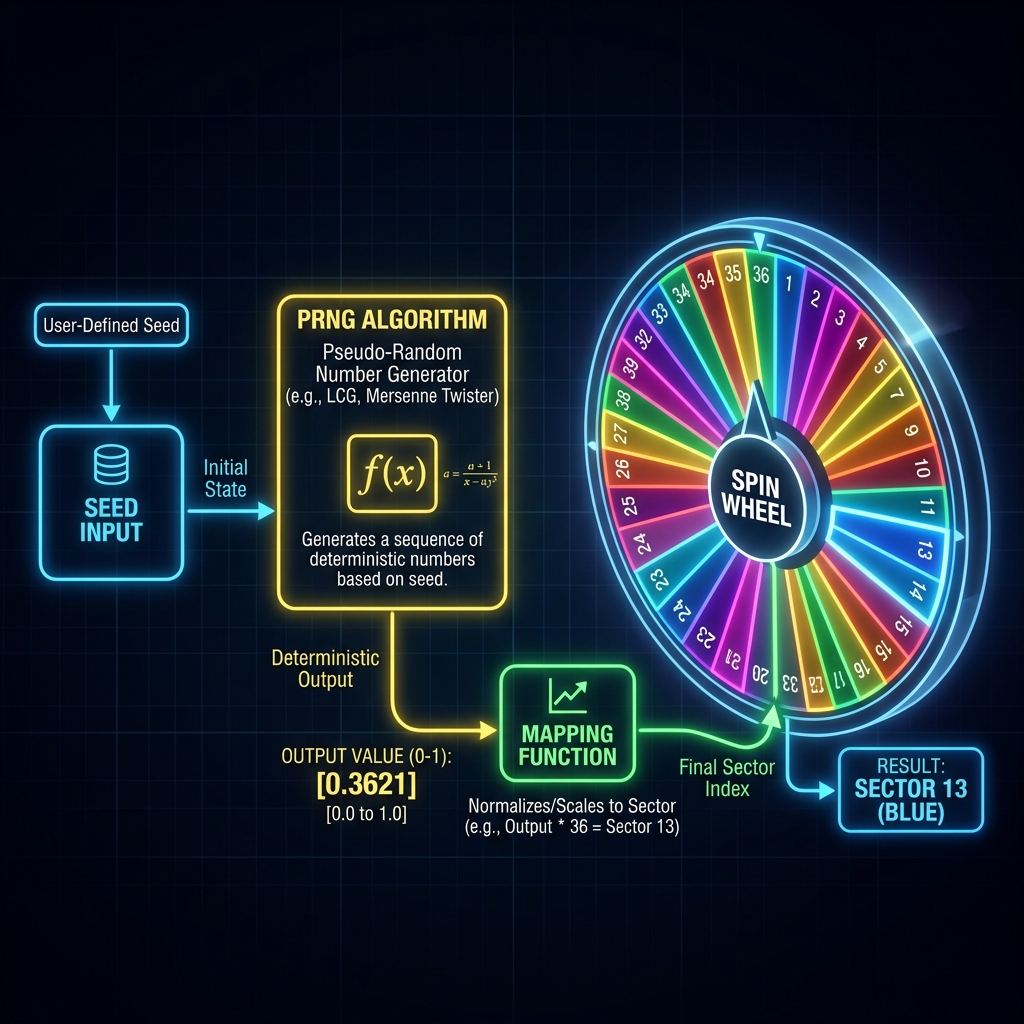
One of the largest risks to a brand's reputation is the accusation of bias or picking favorites in a drawing. To prove the draw is completely fair: * Use Public Randomizers: Share your screen during a live stream or record a video showing the names being entered into a transparent random draw wheel and spun. * Explain the Mechanism: Mention that your winner selector uses verified, mathematically fair algorithms to select the winner, leaving no room for human bias.
5. Handle Prize Delivery Safely
Always follow through on delivering the promised prizes and keep proof of delivery. Failing to deliver prizes is considered consumer fraud and carries heavy penalties.
Checklist: Is Your Online Draw Compliant?
Before you hit publish on your next giveaway, run through this quick compliance checklist:
[ ]Lottery Check: If your drawing requires payment or purchase to enter, are you a registered charity running a licensed raffle? (If not, you must make it free-to-enter).[ ]Free Entry AMOE: Is the free entry method clearly visible and equal in odds to paid entries?[ ]Terms and Rules: Do you have a dedicated page outlining the official rules?[ ]Platform Compliance: Does your post follow the specific promotion guidelines of the hosting social platform (Instagram, YouTube, Facebook)?[ ]A11y / Privacy: Does your sign-up form include a link to your privacy policy, and is it accessible to assistive devices?
Summary
Online giveaways are a fantastic tool for connection and growth, but they must be managed responsibly. By understanding the legal boundaries between lotteries, raffles, and sweepstakes, drafting clear rules, and offering a fair, free alternative entry option, you protect your business and respect your participants.
To keep your drawings transparent and exciting, try using an online raffle picker to select your winners. Proving that your draws are random, public, and fair keeps your audience engaged and your brand compliant!