How to Use Interactive Spin Wheels to Boost E-Commerce Email Signups
Discover how to implement a gamified spin wheel pop-up to supercharge your email signups, reduce cart abandonment, and drive e-commerce conversion optimization.
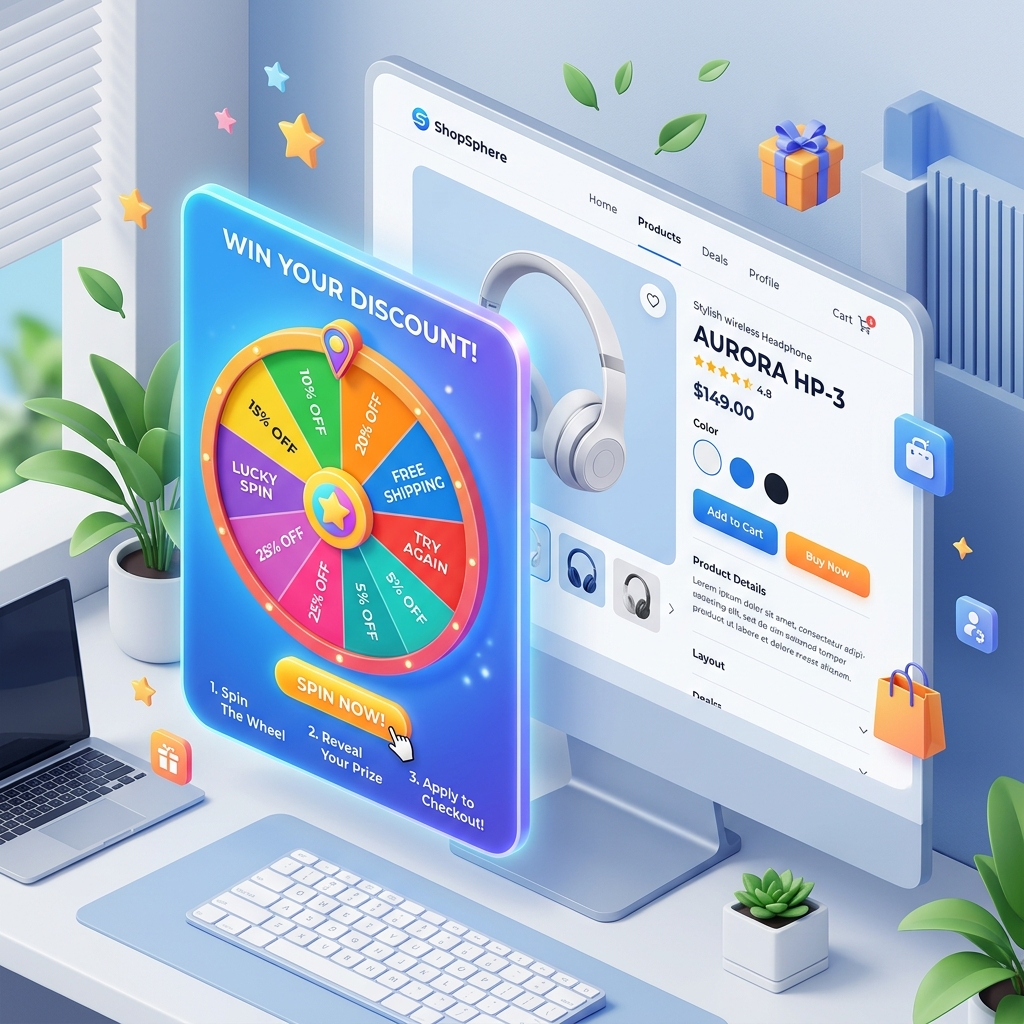
In the hyper-competitive world of e-commerce, building a high-converting email list is one of the most effective ways to drive predictable revenue. While paid acquisition costs continue to rise, owned marketing channels like email and SMS remain the highest ROI tools available to online retailers. However, getting website visitors to share their contact information has become increasingly difficult.
Traditional "10% off your first order" pop-ups have lost their novelty. Visitors have developed banner blindness, quickly closing overlays without reading the offer. To break through this resistance, forward-thinking brands are turning to interactive, gamified lead capture tools. By implementing a gamified spin wheel pop-up, businesses can transform a mundane form-filling task into an engaging, low-stakes game of chance.
In this comprehensive guide, we will explore the psychology behind gamified email signups, detail how to design a margin-safe discount structure, provide a step-by-step implementation guide, and share critical optimization strategies to help you significantly boost your email opt-in rates.
Why Traditional Pop-Ups Fail (And the Psychology of Gamification)
Standard lead generation pop-ups are transactional. They demand a user's personal information in exchange for a static discount code. This approach creates an immediate cognitive friction point: the user must decide if the value of their email address (and the subsequent inbox clutter) is worth the minor discount being offered.
Gamification flips this equation. By introducing elements of play, curiosity, and reward, a spin-to-win wheel overcomes typical user defenses through several key psychological principles:
1. The Dopamine Rush of Unpredictability Human brains are wired to seek rewards, but they are particularly stimulated by *variable rewards*. When a visitor sees a spinning wheel, they do not know exactly what they will win. This creates anticipation, triggering a release of dopamine. The psychological anticipation of winning is often more satisfying than the reward itself, keeping users highly engaged.
2. The Endowment Effect and Ownership When a user spins a wheel and wins a specific prize (e.g., "15% OFF" or "Free Shipping"), they immediately experience a psychological sense of ownership. According to behavioral economics, the **Endowment Effect** suggests that people value items more highly simply because they own them. In the user’s mind, that discount is no longer a generic offer—it is *their* prize. Failing to use it feels like losing something of value.
3. The Power of Choice and Agency Unlike static pop-ups that push a single offer, a gamified wheel gives users a sense of agency. By clicking "Spin Now," the user actively participates in the outcome. This interactive action reduces the feeling of being marketed to, making them far more willing to complete the signup process to lock in their reward.
The Math of the Spin: Designing Margin-Safe Prize Wheels
One of the biggest concerns for e-commerce store owners when introducing a spin wheel pop-up is the risk of giving away too many high-value discounts. If every user lands on "50% OFF" or "Free Product," profit margins will collapse.
To prevent this, you must construct a mathematically sound probability matrix. A professional gamified wheel should allow you to control the exact winning percentages for each slice, ensuring that your average discount rate remains within a margin-safe threshold.
Here is a recommended baseline layout for a 12-segment e-commerce prize wheel:
| Slice | Prize Offered | Probability % | Average Cost / Weight |
|---|---|---|---|
| Slice 1 | 10% Off Discount | 55% | High volume, low margin impact |
| Slice 2 | Free Shipping (on orders over $50) | 25% | Encourages higher Average Order Value (AOV) |
| Slice 3 | 15% Off Discount | 14% | Moderate incentive for hesitant shoppers |
| Slice 4 | Buy 1 Get 1 Free (Selected Items) | 5% | Drives inventory clearance of specific items |
| Slice 5 | 25% Off Discount | 0.9% | High-value, low probability headline prize |
| Slice 6 | $50 Gift Card | 0.1% | The ultimate jackpot prize to drive viral excitement |
| Slices 7-12 | "Try Again" / "No Luck Today" | 0% (or cosmetic only) | Not recommended for lead capture; keep all slices winning |
Calculating the Average Discount Rate (ADR) To ensure your business remains profitable, you can calculate the Average Discount Rate using this simple formula: <br /> <div style="text-align: center; margin: 1.5rem 0; font-weight: bold; font-size: 1.1rem; color: var(--text-main);"> ADR = Σ (Prize Value × Winning Probability) </div>
Using the matrix above (excluding gift cards and free shipping costs): <br /> <div style="text-align: center; margin: 1.5rem 0; font-weight: bold; font-size: 1.1rem; color: var(--text-main);"> ADR = (10% × 0.55) + (15% × 0.14) + (25% × 0.009) = 5.5% + 2.1% + 0.225% = 7.825% </div>
This mathematical approach proves that even with headline-grabbing prizes like "25% OFF" or "$50 Gift Cards" visible on the wheel, your actual blended discount rate is less than 8%. This is significantly cheaper than running a blanket, store-wide 10% discount pop-up, while producing double the engagement.
Step-by-Step Guide to Implementing a High-Converting Spin Wheel Popup
Ready to implement a gamified wheel on your online store? Follow these steps to build a system that captures leads without disrupting the shopping experience:
Step 1: Establish Your Objectives and Baseline Metrics Before launching, document your current conversion benchmarks so you can accurately measure success. Track:<br /> <strong>Visitor-to-Subscriber Rate:</strong> The percentage of site visitors who sign up for your email list.<br /> <strong>Welcome Series Revenue:</strong> The total sales generated from new subscribers within their first 14 days.<br /> <strong>Average Order Value (AOV):</strong> Monitor if discount codes lead to smaller or larger checkout sizes.
Step 2: Choose the Right Trigger and Timing One of the fastest ways to annoy website visitors is to trigger a pop-up the microsecond they land on your site. Give your users room to breathe. The best-performing trigger strategies include:<br /> <strong>Time Delay:</strong> Display the wheel after a visitor has browsed for at least 15 to 30 seconds.<br /> <strong>Scroll Depth:</strong> Trigger the wheel after the visitor has scrolled through 40% to 50% of the page.<br /> <strong>Exit Intent:</strong> Display the wheel when the user's cursor moves toward the browser close button. This acts as a high-conversion safety net to capture abandoning traffic.
Step 3: Design High-Quality, Brand-Consistent Visuals Your spin wheel must look like a premium, integrated feature of your store, not a cheap third-party add-on. Make sure you use custom fonts, clean lines, and a color palette that aligns perfectly with your brand identity. Avoid using generic stock colors on the wheel slices. Instead, use your primary brand colors along with complementary neutral tones.
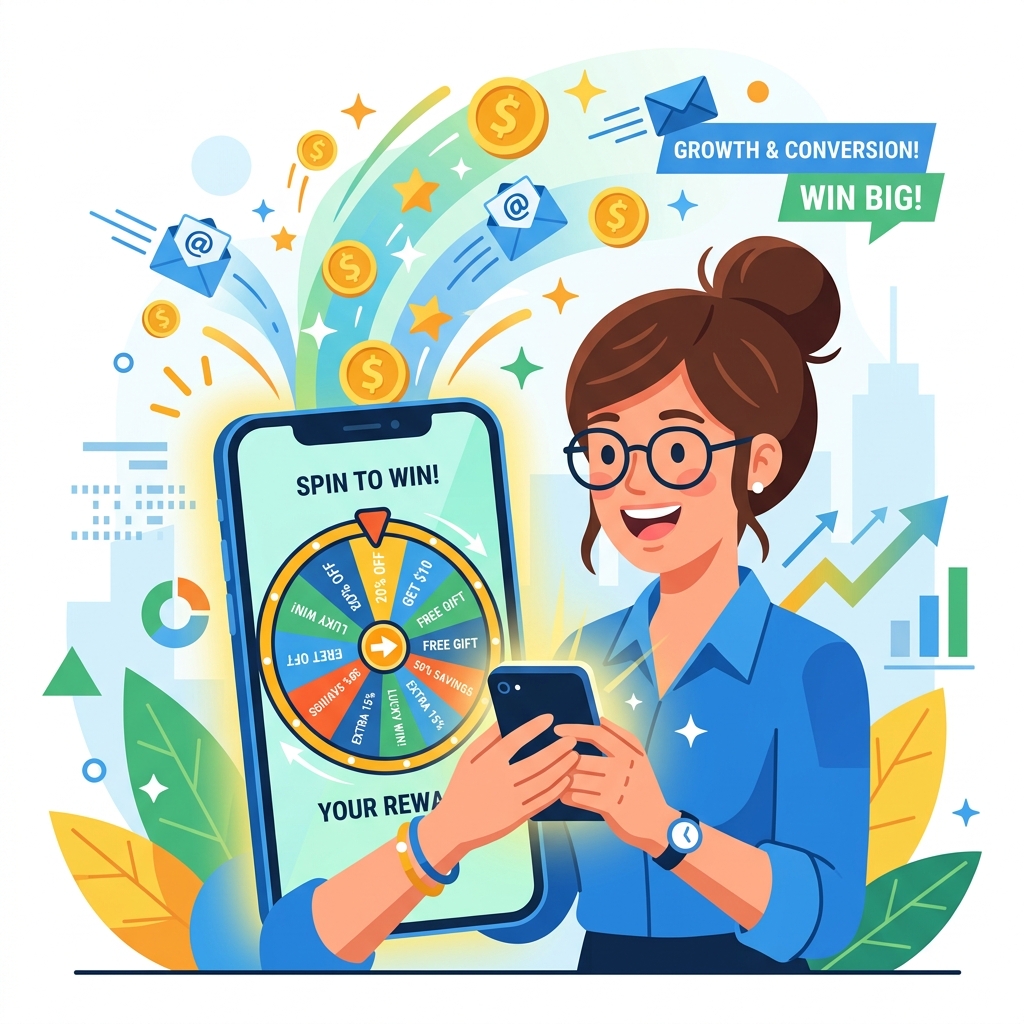
Step 4: Write Compelling Copy Replace generic button text like "Submit" with action-oriented, exciting copy. Your headline should clearly communicate the benefit, and the button should inspire action. Here is an example of high-converting copy:<br /> <strong>Headline:</strong> *"Feeling Lucky? Spin to Win Up to 25% Off!"*<br /> <strong>Subheadline:</strong> *"Unlock your exclusive discount. Enter your email to take a spin!"*<br /> <strong>CTA Button:</strong> *"SPIN THE WHEEL NOW"*
Step 5: Integrate with Your Email Service Provider (ESP) Ensure that your spin wheel popup is directly integrated with your marketing automation platform (such as Klaviyo, Mailchimp, or ActiveCampaign). Once a user submits their email address and spins the wheel, their contact record should be tagged with the specific prize they won. This allows you to automatically send a personalized welcome email containing their unique coupon code.
Optimizing the UX: Best Practices for Gamified Email Signups
While a gamified email signup can dramatically increase conversions, poor user experience (UX) design can lead to high bounce rates and search engine penalties. To ensure your spinner drives revenue without hurting usability, follow these critical best practices:
1. Mobile-First Optimization Over 70% of e-commerce traffic originates from mobile devices. If your spin wheel pop-up is too large, blocks the entire screen, or makes it difficult for mobile users to tap the "Close" button, you will lose customers. * **Guidelines:** Optimize form inputs for mobile touch keyboards, ensure all text remains legible at smaller sizes, and keep the wheel design light and responsive so it loads instantly.
2. Implement strict frequency capping Nothing destroys a user experience faster than a pop-up that appears on every single page view. Set your system cookies to ensure that if a user closes the wheel or completes a spin, they will not see the popup again for at least 30 to 60 days.
3. Clear and accessible "Close" buttons Do not hide your close button or make it hard to find. Users who are not interested should be able to dismiss the wheel immediately. A visible, easy-to-click "X" button build trust and prevents negative brand associations.
4. Provide instant coupon delivery Once a user wins, display their discount code clearly on the final screen so they can copy it with a single tap. Do not force them to open their email inbox to retrieve the code, as this breaks the checkout momentum. You can still email them a copy of the code as a backup, but the immediate purchase intent should be capitalized on right on the screen.
5. A/B Test Your Slices and Offers Continuously optimize your wheel performance by running split tests on:<br /> <strong>Headline copy:</strong> Test urgency-focused copy vs. reward-focused copy.<br /> <strong>Wheel colors:</strong> Test high-contrast accent slices vs. monochromatic, brand-matching layouts.<br /> <strong>Offer structures:</strong> Compare the engagement rates of a "Free Shipping" slice vs. a "Free Mystery Gift" slice.
Real-World Case Studies: How E-commerce Brands Scaled Conversions
To understand the practical impact of gamification, let's review how different online retailers successfully utilized interactive prize wheels:
Case Study 1: The Fashion Boutique An online apparel brand replaced their standard "10% off sign up box" with an exit-intent spin wheel pop-up. * **Results:** Their visitor-to-subscriber conversion rate increased from 2.4% to 7.8% within the first month. Additionally, because the wheel distributed a mix of 10%, 15%, and free shipping offers, the brand's average discount margin actually decreased by 1.2% compared to their old flat-rate campaign.
Case Study 2: The Specialty Foods Brand A gourmet snack provider implemented a timed spin wheel popup (15-second delay) on their product collection pages. * **Results:** They saw a 220% increase in monthly email opt-ins. More importantly, they realized that users who won a "Free Gift with Purchase" slice had a 35% higher Average Order Value (AOV) than those who checked out using standard percentage-off codes.
Conclusion: Transforming Your Signup Strategy
Gamification is not just a passing trend; it is a fundamental shift in how digital businesses interact with their audience. By turning lead capture into an engaging, interactive experience, a spin wheel pop-up respects the user's attention, lowers resistance, and creates an immediate sense of excitement.
By pairing a mathematically sound prize structure with clean, mobile-first design, you can supercharge your subscriber list, lower customer acquisition costs, and drive long-term retention.
If you are looking to test different layouts, slice combinations, and spin mechanics before deploying a popup on your website, you can use the free, customizable tools on the YaySpinner Homepage to simulate spin frequencies, experiment with custom themes, and refine your brand's interactive aesthetic.